About Westcave
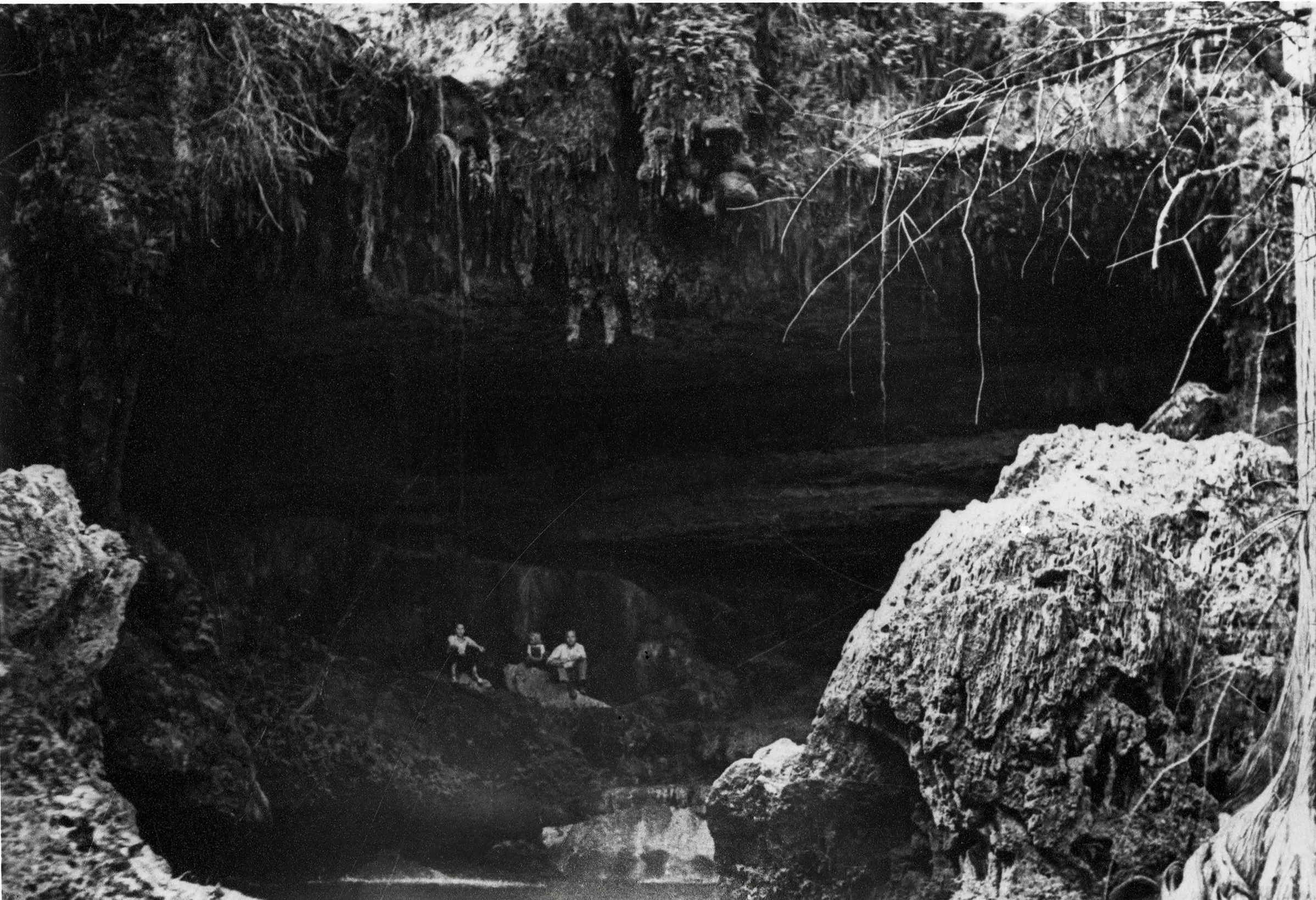
Photo from Austin History Center
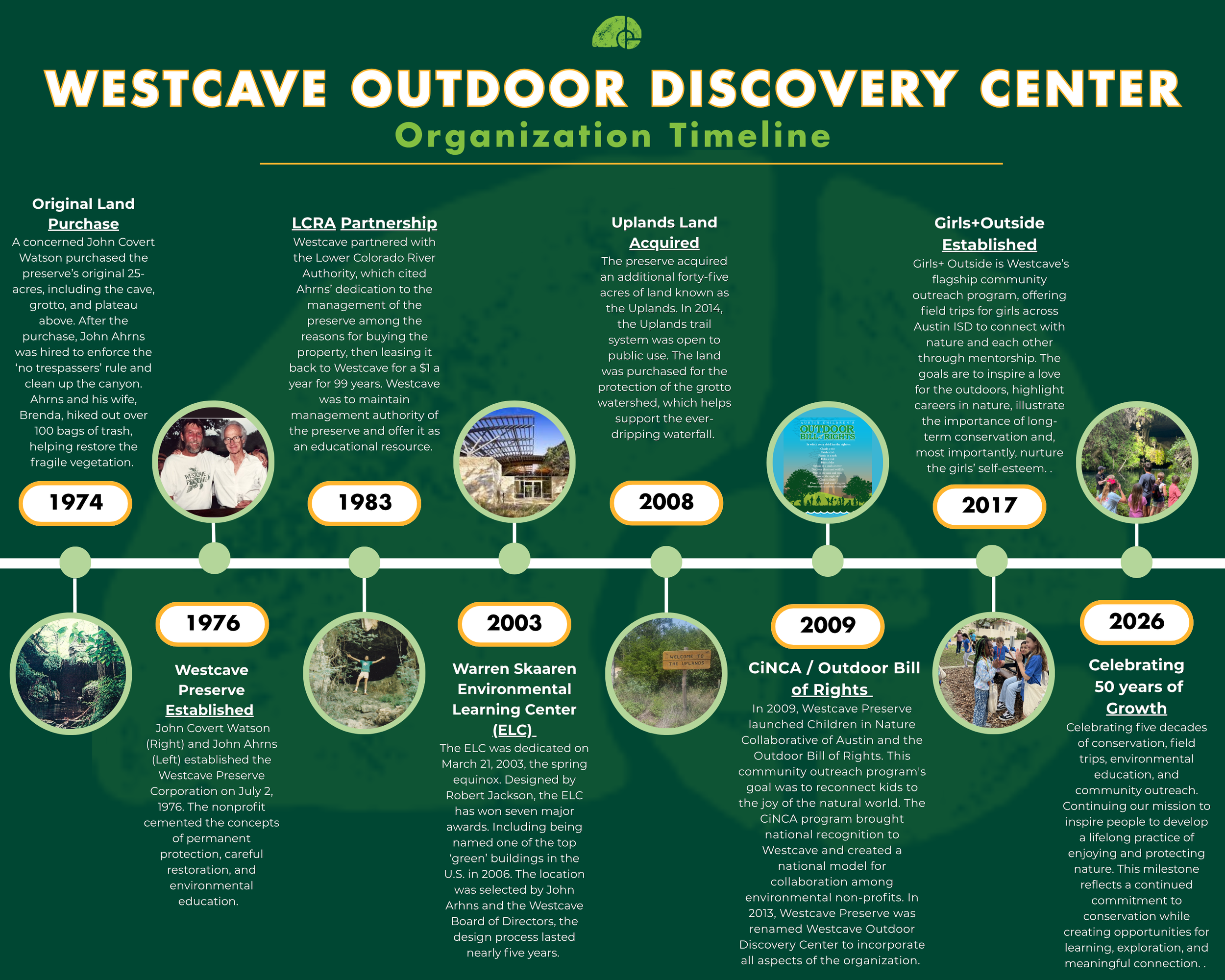
Founded in 1976 as Westcave Preserve, the mission of Westcave Outdoor Discovery Center, a 501(c)(3) nonprofit organization, is to inspire people to develop a lifelong practice of enjoying and protecting nature.
We accomplish this through educational programs, collaborative alliances, and conservation of our beautiful 76-acre preserve.
TEACHING
While many places offer opportunities for self-led nature activities, Westcave has dedicated staff who partner with schools to teach 6,000 students annually. Students learn key scientific concepts in the best classroom of all: our 76-acre preserve in Southwest Travis County and our nationally renowned Warren Skaaren Environmental Learning Center.
What makes the experience so special? At our preserve, you not only witness a place of extraordinary beauty, you observe a living laboratory. You walk through hundreds of thousands of years of geologic formations as you hike to the bottom of the canyon. And at the head of our canyon is a lush, wet grotto where you can see with your own eyes how the water cycle works.
COLLABORATING
The Children in Nature Collaborative of Austin (CiNCA) was started as a mighty force for good, catalyzing 60+ member nonprofits, environmental educators, health professionals and community leaders to work together on common goals. Westcave Outdoor Discovery Center lead CiNCA in its efforts to connect children and families to nature, because we believe forming strategic alliances and sharing ideas and resources increases our collective impact. The success of the CiNCA coalition was a national model for successful collaboration and has now blossomed into its own entity: Texas Children in Nature Network (TCiNN). Westcave is a proud member of the Network and continues to form strategic alliances through Girls+Outside, Austin Outdoors and others that share a love and commitment to outdoor education and nature preservation.
CONSERVING
Our preserve is located in Southwest Travis County, one of the fastest-growing metropolitan areas in the country. Protecting this beautiful land, which is home to the endangered Golden-cheeked Warbler and attracts birders from all over the world, has become more important than ever.
It began in 1974 with the purchase of 25 acres that had been trespassed and badly abused. The last four decades have seen that land renew and flourish under Westcave's visionary care, and today our original preserve is celebrated as a natural treasure. Recently, Westcave purchased an additional 45 acres of adjacent property, which we call the Uplands. Once again, Westcave is restoring the land so that it can be enjoyed by generations to come.